Lung Cancer is never easy.
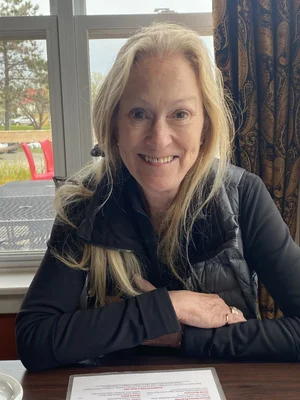
“I called the palliative unit as soon as I got the results,” said Denise. “I live alone and don’t want to leave a mess for anyone to clean up.”
My heart swelled with compassion for my new friend. Lung Cancer Canada had paired us as she had been looking to connect with someone who shared her diagnosis of multi-focal non-small-cell lung cancer. It was our first telephone call, and we were trading details of our cancer stories. We had both been diagnosed with Stage I lung cancer on three separate occasions, cancer that had never metastasized to other organs. We were both survivors of lobectomies, segmentectomies, and radiation therapy. We both had smoking histories.
Eerily, we were the same age, sixty-nine, had both lived in NDG in Montreal in the 1970s, and now lived on opposite coasts. She had just received her fourth diagnosis of cancer and given the amount of lung tissue she had surrendered to the eradication of the first three tumours, she believed this episode would kill her. Hence, her call to the palliative specialist.
“I came up with a terrible slogan after my second diagnosis,” I said, interlacing my fingers around the phone. “Death by disease, or death by cure.” We both laughed, buoyed by the relief of sharing a joke with someone who understood the dark irony.
“I agree it’s important to make end-of-life plans,” I said. “But I’m not giving up hope yet–and neither should you.”
Win’s story was different, but he, too, was facing the spectre of premature death should treatment no longer offer a solution. He was a physically fit, never smoker in his late forties whose chronic cough led him to seek medical advice. His non-small-cell lung cancer was diagnosed at Stage IV. His treatment journey included the familiar litany of CT scans, PET scans, and biopsy–and something I’d yet to encounter personally–targeted therapy. We met as panellists at a Lung Cancer Summit where Win recounted the story of lung cancer patients sharing remainder supplies of targeted therapy drugs with a price tag in the thousands of dollars per month.
“You can find them on Facebook,” he said. “Someone has died, and there is a stash of pills.”
Later, over a Macha tea at a small coffee shop near the summit hotel, Win shared additional details.
“I’m on my third line, so neither Ontario Health nor my insurance company would cover the cost.” By third line, he meant his cancer had stopped responding to two different targeted drugs, and he would be trying a third. “My only hope was a clinical trial,” he motioned with the cup in his hand. “If you’re in one of those, the pharmaceutical company covers the drug costs.”
“Thank God you got in,” I said. He smiled and nodded.
“Not giving up.”
Cancer patients face tough choices every day. Disclose or dissemble. Fight or flight. Guilt or grace. It’s a deeply personal choice. Win admitted that he had kept his illness a secret for many years. Afraid his clients would consider him unfit or unable to work. I had faced the same fear. Denise wanted to know if there was someone else who understood her story. I had felt the same need.
Having any form of cancer is hard but lung cancer patients face an additional burden–the burn of stigma. A stigma so pervasive it hinders fundraising for lung cancer research and pits lung cancer patients against each other. Denise and I might agree that we are at fault for our lung cancer and certainly could agree that it would have been better had we never started smoking. Win might resent the assumption that his cancer is the result of a smoking history, when it is not.
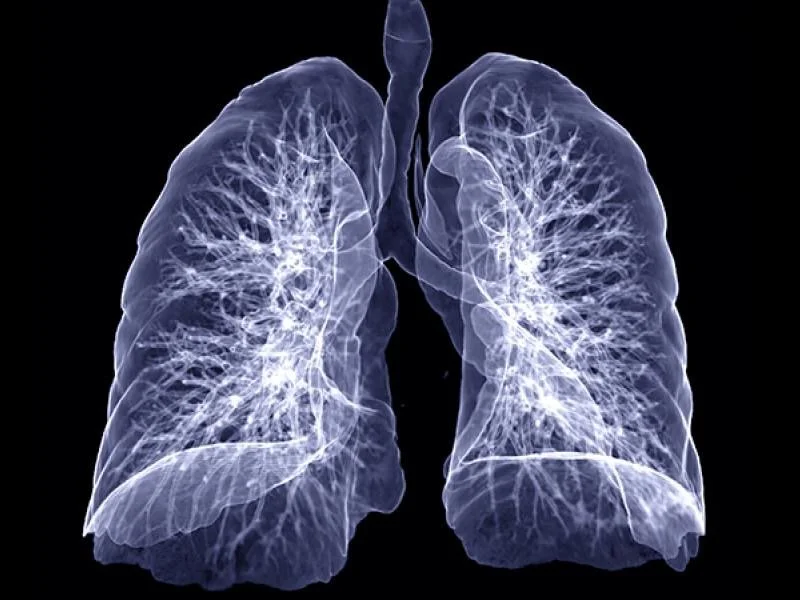
Air pollution, radon gas, and cigarette smoke are all listed as potential triggers for the genetic mutations at the cellular level that herald the arrival of cancer. Regardless of the cause, lung cancer has another terrible superpower–a cloaking device. Human lungs lack nerves. This is the reason more than half of all lung cancer is diagnosed at Stage IV, when it has already spread to other organs and is exponentially more costly and difficult to treat. Patients have no obvious symptoms. The five-year survival rate for cancer diagnosed at Stage I is 70% and climbing. The five-year survival rate for a diagnosis at Stage IV is 5%.
This grim statistic is behind my quest to accelerate research into the science of early detection. Cancer found early, even lung cancer, can be cured.
An estimated 2 in 5 Canadians will be diagnosed with cancer in their lifetime. Lung cancer is the leading cause of cancer death.
Please consider donating to lung cancer research:
Canada
USA
Lung Cancer Research Foundation
International